Imagine picking up your phone one morning and hearing a potential customer say, “I asked ChatGPT for help, and it recommended your business.”
I’d love for you to experience that.
Not because ChatGPT is some magical source of customers, but because of what that conversation would mean. Someone had a problem, explained exactly what they needed, and your business came up as a relevant option.
They weren’t responding to an advertisement or clicking through a dozen websites trying to figure out which company to trust. They were looking for someone who understood their situation. That’s a much more powerful way to gain a new client and begin a new relationship.
Now, you might be wondering what you can actually do to increase the chances of something like this happening for your business.
I want to show you an approach we’ve been working on at AISQ for the Squirrly products, because it brings together several things I’ve been teaching about marketing for years.
And it starts somewhere you might not expect: with the questions your customers are already asking.
Your Customers Are Telling You What to Write about. Are You Listening?
Let’s say you run an online store selling diamond jewelry.
You’ve spent years learning about diamonds, choosing beautiful pieces for your collection, and helping customers find jewelry that feels special. You understand the difference between a diamond that looks impressive in a photograph and one that truly sparkles when someone opens the box.
You also know something that many first-time diamond buyers don’t: choosing the right diamond involves a lot more than looking at carat weight and comparing prices.
Then one afternoon, someone visits your website and asks a simple question:
“How can I be sure the diamond I buy online is actually worth what I’m paying for?”
If you’ve been selling diamond jewelry for a while, you probably recognize how valuable that question is.
This person isn’t really asking for another product description. They’re worried about making an expensive mistake. They want to know whether they can trust your store, whether the diamond will look as beautiful in person, and whether they’re getting genuine quality for their money.
And if you can answer those concerns convincingly, you may have just given them the reason they needed to choose you.
But think about what usually happens to a question like this.
You answer it in an email, a chat conversation, or perhaps over the phone. You explain diamond grading, what to look for in a certification report, how cut quality influences brilliance, and what buyers should pay attention to before ordering.
The customer gets the information, and the conversation ends.
To ME: this just means all the evidence disappears. Boom. Gone in 60 seconds.
How can ChatGPT or Perplexity retrieve that information and that body of evidence, so the LLMs can trust you enough, just like that person over the phone?
Meanwhile, there could be hundreds of other people with exactly the same concern who never discover how knowledgeable and trustworthy your store really is.
Your website might have stunning product photography, beautifully designed collections, and detailed product specifications, but nowhere does it properly explain how you help customers make confident decisions about buying diamonds online.
And if people can’t easily find that information, how are search engines or AI assistants supposed to discover it and connect it with the right questions?
Some of your strongest reasons to be chosen may be things you’ve never properly explained online.
That’s the opportunity I want you to see.
Instead of treating a customer question as something you answer once and forget, what if you treated it as the beginning of a marketing campaign?
Here’s how I’d turn that question into something much bigger, that bring compounding growth.
STEP 1: First, I’d want a reliable way to collect these questions.
That’s where ContentLook AI comes in. Its Ask AI feature allows visitors to ask questions directly on your website, and it keeps a record of those conversations.
You can discover:
- what people are curious about,
- what concerns are preventing them from moving forward,
- and even which questions your website currently struggles to answer.
For our diamond jewelry store, discovering that several people are worried about buying authentic, high-quality diamonds online would be a valuable insight. It’s a real concern expressed by real potential customers, not just another keyword someone found in a research tool.
STEP 2: Now that we know what people need to hear, we can create something useful around it.
I’d use Next Level Marketing AI to develop an article about how to buy diamond jewelry online with confidence, what makes one diamond more valuable than another, and how to recognize quality beyond the price tag.
And I wouldn’t want another generic article explaining the four Cs in exactly the same way as a thousand other jewelry websites.
I’d want the store owner’s knowledge in it. Their experience selecting diamonds. Perhaps a story about helping a customer choose between two engagement rings that looked nearly identical but had very different characteristics. The little details an experienced jeweler notices that most buyers would never think to check.
This is one of the reasons I’m excited about the new Next Level Marketing AI 2027. You can add up to four Context Focus elements per article, giving the system more specific information to work with.
You bring the knowledge and experience that make your business different, and the AI helps you turn that into well-researched, structured content. You still review and approve what gets published.
The result is something that didn’t exist before: a useful, public explanation of how this particular diamond jewelry store helps people choose beautiful, high-quality pieces without feeling uncertain about their purchase.
That’s valuable for the customer reading the article, of course. But it’s also valuable for the systems trying to understand what the business does and whom it helps.
STEP 3: The next thing I’d do is make sure that article isn’t sitting on a website where nobody can find it.
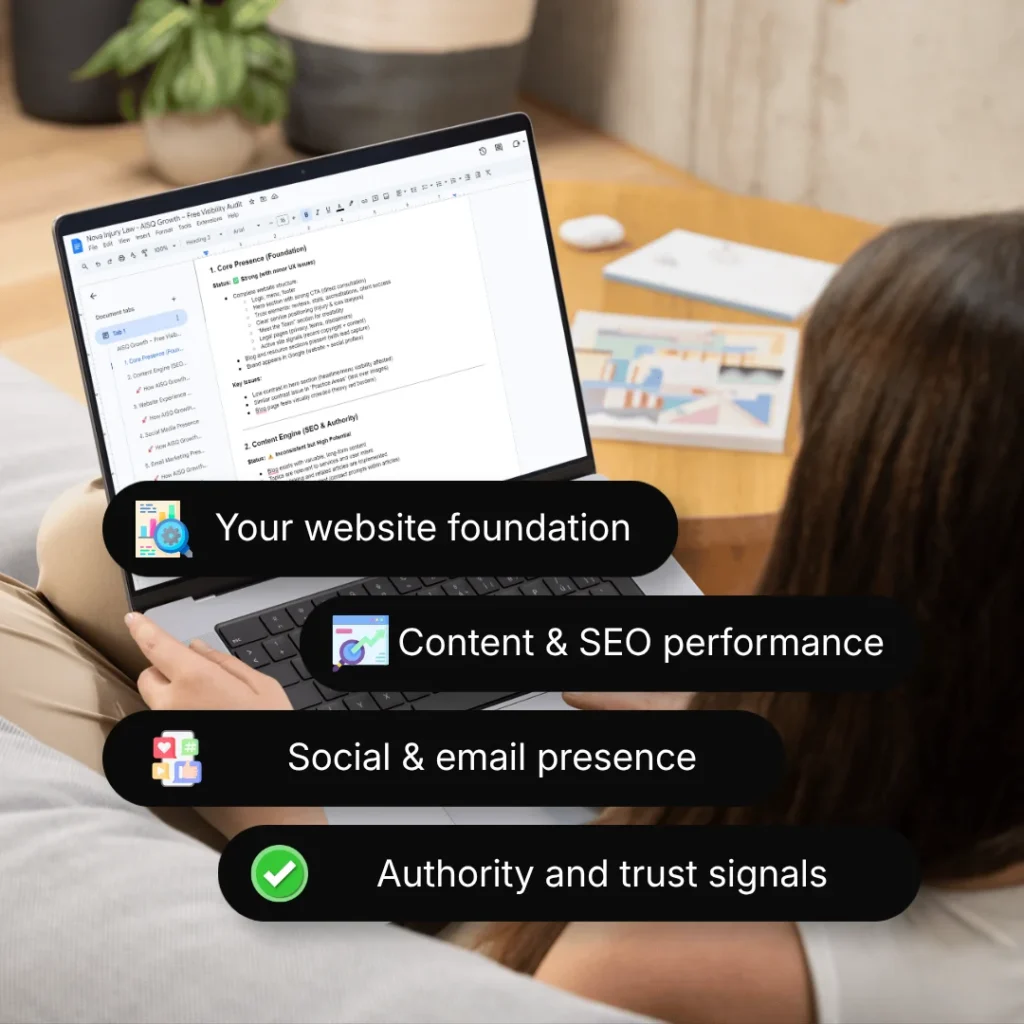
With the GEO Plugin by Squirrly SEO, you can examine how ready your content is for traditional search and AI-driven discovery. The GEO Audit looks at AEO and GEO factors, internal linking helps connect the article to relevant product and collection pages, and structured data provides additional context about the business.
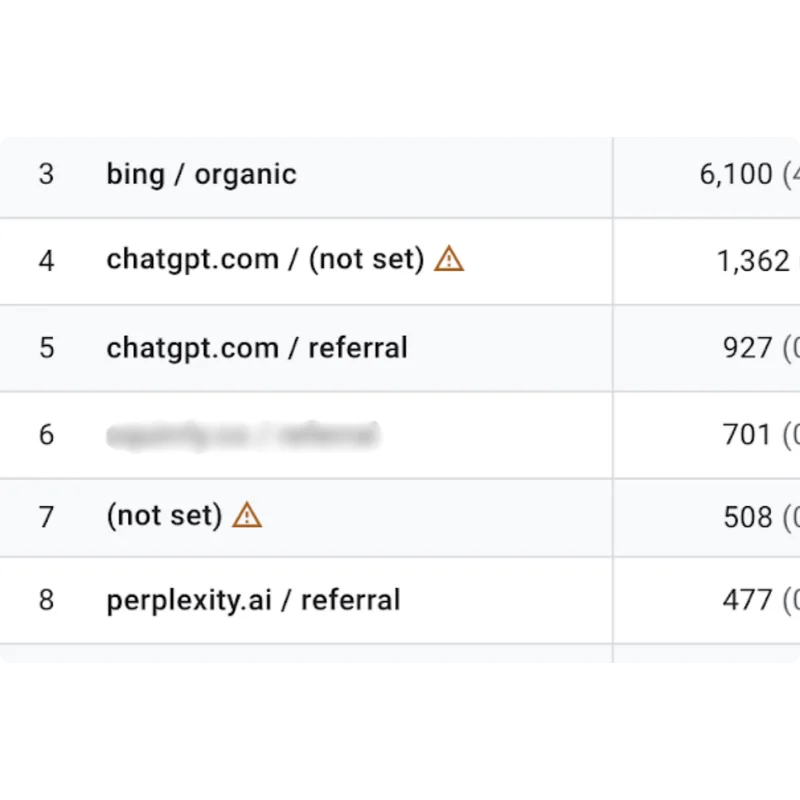
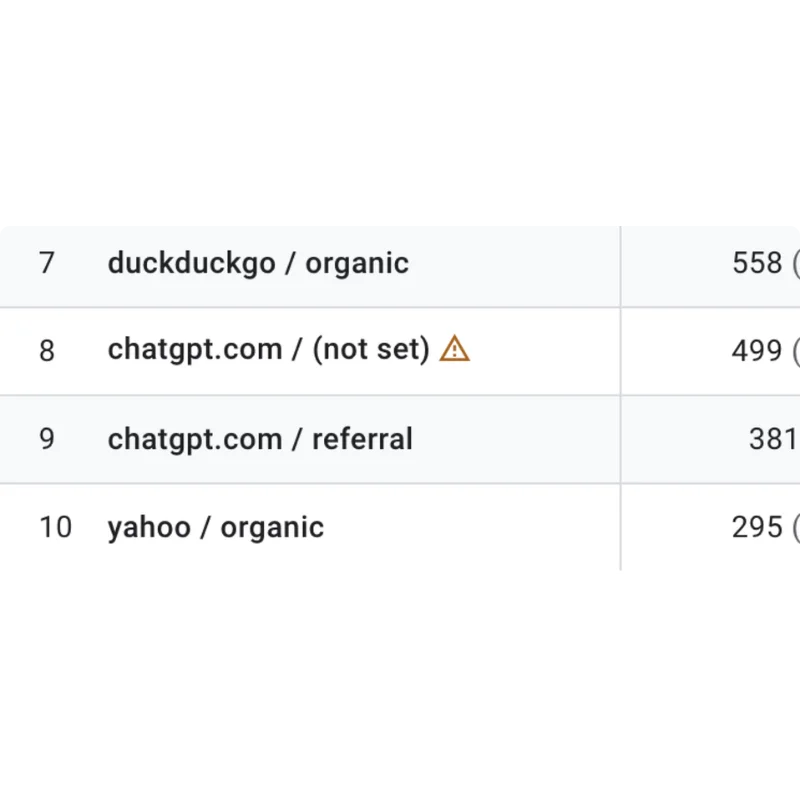
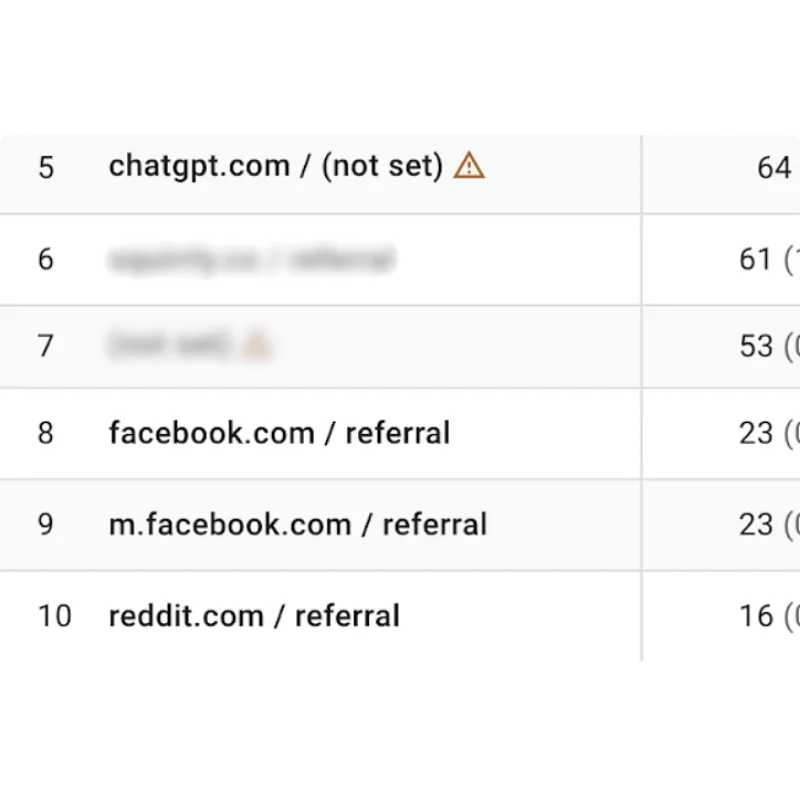
There’s also AI Visibility, which helps you identify measurable visits coming from platforms such as ChatGPT and Perplexity. You can also track how many mentions your brand starts receiving.
Will doing all this guarantee that ChatGPT recommends your business? Of course not. Nobody can honestly promise that.
But you are making your expertise easier to discover, understand, and connect with specific customer needs. That’s a much stronger position than simply hoping an AI system will somehow figure out everything that makes you different.
And I wouldn’t stop with the article.
STEP 4: I’d take some of the most useful ideas and examples from it and share them on social media.
Perhaps a post explaining why two diamonds of the same carat weight can have very different prices. Another showing customers what to look for in a diamond grading report. Maybe a short story about helping someone find a beautiful engagement ring without exceeding their budget.
Next Level Marketing AI can help prepare that social content, and its integration with Squirrly Social Post Groups makes it easier to move the posts into a scheduling and publishing workflow. To be clear: Next Level moves it and ensure publishing after you approve.
You don’t have to keep rewriting the same material from scratch or manually moving it between five disconnected applications.
STEP 5: Then I’d use Email Hero to send the new guide to subscribers who might be interested.
Maybe someone on the store’s list has been browsing engagement rings for weeks but hasn’t felt confident enough to order. Maybe they’re looking for an anniversary gift and don’t know where to begin. Maybe reading the guide helps them understand why a particular piece in your collection is worth considering.
And when a new visitor discovers the business through search, social media, or an AI recommendation, Email Hero can help continue that relationship through useful email communications.
Also, you need interesting content people would want to read, so you can use Email Hero to bring back people to your store. Remember that Google can’t understand quality without seeing visitors on pages. You need a way to bring them in, otherwise search and retrieval will not work.
So now look at what we’ve accomplished.
We started with a question that might otherwise have disappeared inside a private conversation.
That question helped us create an article based on genuine customer needs and real business expertise. We made it easier for search and AI discovery systems to understand the content, turned its insights into social posts, and used email to bring interested people back.
And because we’re still collecting questions from website visitors, we can discover what to create next.
One good question has become the foundation for an entire marketing campaign.
Imagine repeating that process every week, using the knowledge you’ve already accumulated through years of working with customers.
After a few months, your website would have a growing collection of genuinely useful answers. Your social profiles would regularly share your expertise. Your email subscribers would have more reasons to engage with your business.
And instead of publishing content just to fill a calendar, you’d be building a digital presence around the real problems your customers want solved.
I think that’s a much more intelligent use of AI in marketing.
For years, businesses have been told they need better SEO, more content, consistent social media activity, and stronger email marketing.
That’s all true. But I also know how frustrating it can be to hear that advice when you’re already busy running a business.
Most small business owners don’t have the time to become specialists in five different marketing disciplines. And buying five separate applications doesn’t automatically solve the problem, especially when none of them work together.
We wanted to make the process more manageable.
So we created five tools that can support the whole workflow, from discovering customer questions to creating content, improving visibility, distributing it, and maintaining the relationship afterward.
- ContentLook AI to discover the questions visitors are asking and identify missing answers.
- Next Level Marketing AI to research, plan, and create content built around your business expertise.
- GEO Plugin by Squirrly SEO to improve search and AI-discovery readiness and monitor AI referral traffic.
- Squirrly Social to help schedule and publish social content consistently.
- Email Hero to bring people back, nurture their interest, and turn more of that attention into business opportunities.
What I really want you to consider is what you could accomplish if you started using your customer knowledge in a more connected way.
You don’t need to invent a completely new marketing strategy every Monday. You don’t need to publish generic AI content just because everyone else is doing it. And you certainly don’t need to spend your evenings transferring information between dashboards.
You can start with the questions your customers are already asking, use the experience you’ve built in your business to answer them properly, and let the tools help you turn those answers into content and campaigns that work across multiple channels.
That’s the kind of marketing I want more small businesses to be able to do.
The next time someone asks ChatGPT to recommend a business like yours, I want your company to have a better chance of being discovered and considered.
More importantly, I want the people who find you to see clear, convincing reasons why you’re the right choice.
That’s something you can start building today.
P.S. Here’s something worth trying today. Think about the question people tend to ask right before they become customers. The one that reveals what they’re nervous about, what they don’t understand, or what they need to believe before choosing you.
Now visit your website and see how easy it is to find a really good answer to that question.
If the answer is missing, you’ve just found an excellent starting point for your next marketing campaign.